While the conflict between Iran and Israel seems worlds away from the glass skyscrapers of Cyber City, the ripples of the Middle East crisis are already reaching Gurugram’s shores. Geopolitical distance, unfortunately, does not ensure your investment is safe from volatility.
Economists call this the “transmission mechanism”—the invisible chain connecting a drone strike abroad to a price hike locally. In practice, higher global oil prices make it more expensive to truck cement and steel to construction sites on the Dwarka Expressway, inevitably driving up the baseline cost of new homes.
For anyone analyzing the Impact of Iran-Israel War on Gurugram Real Estate, the core issue isn’t military strategy, but financial security. Global tension creates local inflation, helping you determine if your possession date—or your future EMI—is at risk.
Why a Drone Strike in the Middle East Makes Your New Flat More Expensive
When you look at the bustling construction sites along the Dwarka Expressway, you see concrete and steel, but the invisible engine running it all is crude oil. The immediate economic shock of regional instability is almost always a spike in oil prices, and for a real estate market heavily dependent on moving massive amounts of material, this changes the math for every ongoing project.
Global conflicts often lead to a surge in fuel costs, which acts as a tax on movement. Every truck ferrying bricks from Rajasthan or tiles from Gujarat to your project site in Sector 65 now costs more to run. Builders refer to this as rising “input costs.” Since developers operate on tight margins, they rarely absorb these extra logistics expenses; instead, they pass them directly to you in the form of higher per-square-foot rates.
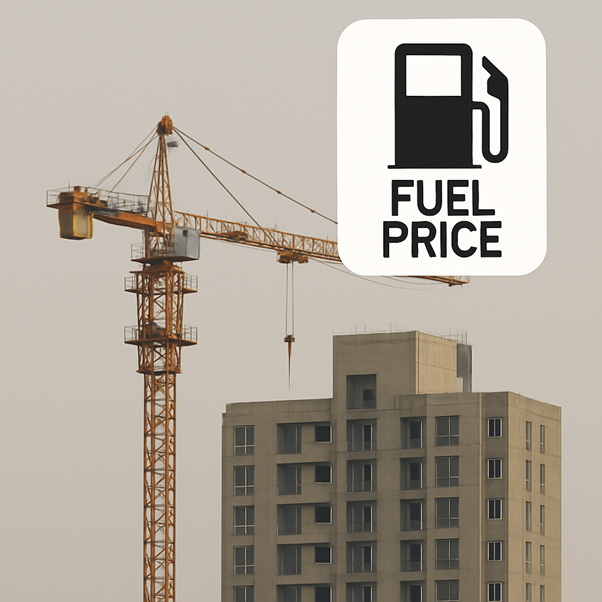
This isn’t just about diesel for trucks, though. Several core components of your future apartment are highly sensitive to energy prices:
- Cement: Extremely heavy to transport and requires immense heat to produce, making it doubly vulnerable to energy inflation.
- Steel: Production is energy-intensive, and global scarcity drives up local rates.
- Bitumen: Essential for paving internal project roads and derived directly from crude oil.
If these costs remain high, developers in New Gurgaon may be forced to announce price revisions sooner than expected. Unfortunately, a higher sticker price isn’t the only financial squeeze potential buyers face.
Will Your Home Loan EMI Rise? The Connection Between Geopolitical Crises and RBI Decisions
Most homebuyers in Gurugram waiting for interest rates to drop below 8.5% may face disappointment as global instability hits the pause button on those plans. When oil prices spike due to conflict, general inflation rises, forcing the Reserve Bank of India (RBI) to act like a strict referee. To stop prices from spiraling, the central bank keeps the “Repo rate”—the cost for banks to borrow money—high. Instead of the relief you were hoping for, lenders maintain their current rates to protect the economy, meaning the timeline for a lower monthly payment gets pushed further into the future.
Escalating conflicts often cause international investors to seek safety, pulling capital out of markets like India and weakening our currency. The impact of Indian Rupee depreciation on property buying is subtle but significant; a weaker Rupee makes importing fuel and premium construction finishes costlier, fueling the very inflation the RBI is fighting. For a borrower looking at sectors like Sohna Road, this economic chain reaction ensures that home loan interest rate fluctuations during geopolitical crisis tend to remain elevated rather than becoming affordable.
Budgeting for an apartment on the Southern Peripheral Road now requires calculating affordability based on these peak rates rather than betting on a quick dip. While high EMIs might make local buyers hesitate, a weaker currency signals a massive discount for a different group of investors, potentially changing who your competition is.
Is Now the Time to Buy? Why Global Instability Drives NRIs Toward Gurugram Luxury Real Estate
Historically, times of international turmoil create unique investment opportunities for those holding foreign currency. While the traditional debate often focuses on investing in gold vs real estate during war, property offers dual benefits: physical security and rental potential. When the Indian Rupee weakens against the Dollar or Dirham, Gulf-based NRIs investing in Gurgaon properties suddenly see their purchasing power spike. This effectively places luxury homes on ‘sale’ for overseas buyers, driving shifts in Indian investor sentiment towards luxury real estate as a stable anchor against stock market volatility.
This influx of capital tends to concentrate in specific corridors known for infrastructure quality and long-term appreciation. Investors prioritize safe real estate investment hubs in Delhi NCR that have historically weathered economic storms better than developing fringes. Consequently, demand in these premium sectors remains robust, creating a price floor that protects early buyers.
Top 3 ‘Safe Haven’ hubs in Gurugram:
- Golf Course Extension Road: Preferred for its established luxury ecosystem.
- Dwarka Expressway: Favored for its connectivity and high appreciation potential.
- Sohna Road: Chosen for its blend of affordability and developed infrastructure.
However, while asset values may be safe, the physical construction timeline faces a different set of risks.
Protecting Your Investment: Why You Should Prepare for Potential Possession Delays
If you are waiting for the keys to a luxury apartment on the Dwarka Expressway, you might need to adjust your move-in calendar. High-end developments often rely on Italian marble, European fixtures, and specialized machinery that must travel through international shipping lanes now compromised by regional tension. When logistics disruptions affecting Gurugram residential projects occur, builders face shortages that can push possession dates back by three to six months, even if the structural shell looks complete. It is crucial to ask your developer specifically about their inventory of imported finishings rather than relying on generic timeline assurances.
Beyond residential delays, the impact on office space demand in Cyber City serves as a vital health check for the broader market. Major multinational corporations tend to freeze expansion plans during geopolitical crises to preserve cash, which can temporarily soften rental growth in commercial hubs. While the historical performance of Gurgaon property market during global wars suggests long-term resilience, a short-term pause in commercial leasing often signals a cooling period for residential rental yields nearby. Monitoring these corporate moves provides a realistic gauge for your investment’s immediate returns while the world navigates this period of instability.
Your 3-Step Action Plan for Navigating the Gurugram Market Amidst Global Uncertainty
Understanding the market protects you from panic. While some worry “will property prices in Gurugram fall after Iran-Israel conflict,” local fundamentals remain resilient. Secure your position with this plan:
- Lock in property prices now before hikes.
- Secure fixed-rate loans if possible.
- Focus on ready-to-move-in inventory to avoid construction delay risks.
Global events cause market volatility, not necessarily a crash. Real estate offers a stable anchor when diversifying investment portfolios amidst Middle East instability. By focusing on completed projects, you ensure distant geopolitical tremors don’t shake your home ownership dreams.